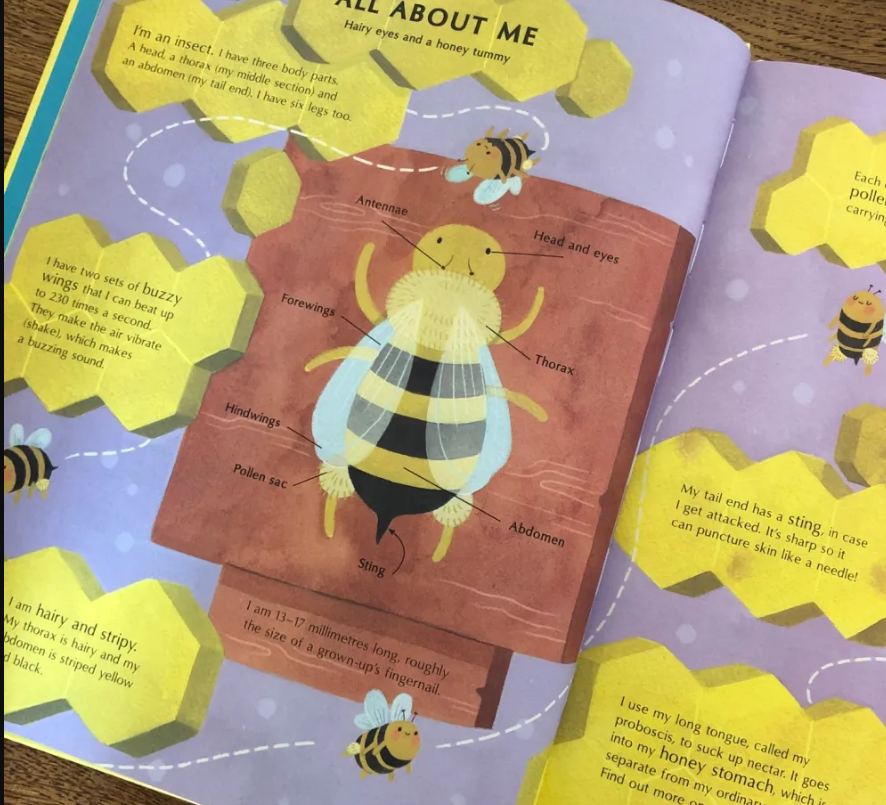
Bees are among the most vital creatures on Earth, yet their incredible contributions often go unnoticed. Despite their tiny size, bees play a critical role in pollination, helping plants reproduce and ensuring the survival of ecosystems. Without bees, many of the fruits, vegetables, and flowers we rely on would struggle to exist.
Beyond their ecological importance, bees exhibit complex social behaviors, advanced communication, and remarkable problem-solving abilities. Understanding the secret life of bees reveals not only their importance but also the fascinating intricacies of nature’s design.
The Role of Bees in Pollination
Pollination is the process of transferring pollen from the male part of a flower to the female part, allowing plants to produce seeds and fruit. Bees are among the most efficient pollinators:
- They visit hundreds of flowers daily, collecting nectar and pollen.
- While feeding, pollen sticks to their bodies and is carried to other flowers, completing the reproductive process.
- Many crops, including apples, almonds, blueberries, and cucumbers, depend heavily on bee pollination.
In fact, it is estimated that one-third of the food we eat relies directly on pollination by bees. Their work supports global food security and sustains biodiversity.
The Complex Social Life of Bees
Bees live in highly organized colonies with distinct roles:
- Queen Bee: The heart of the hive, responsible for laying eggs. A healthy queen can produce thousands of offspring in her lifetime.
- Worker Bees: Female bees that maintain the hive, collect food, care for larvae, and defend the colony.
- Drone Bees: Male bees whose primary role is to mate with queens from other hives.
This division of labor allows the hive to function efficiently and ensures the survival of the colony.
Communication and Navigation
Bees have developed sophisticated methods of communication. One of the most famous is the “waggle dance”, a movement that conveys information about the direction and distance of food sources. By performing precise movements, bees inform their hive mates where to find nectar and pollen.
Additionally, bees use landmarks, the position of the sun, and even the Earth’s magnetic field to navigate and locate flowers. These abilities make bees exceptional foragers and communicators.
Intelligence and Problem-Solving
Despite their small size, bees are highly intelligent. Research shows that they can:
- Recognize human faces and differentiate between shapes.
- Learn through observation and adapt to changing environments.
- Solve problems, such as finding the most efficient path between flowers, similar to the traveling salesman problem in mathematics.
Their cognitive abilities demonstrate that complex thinking is not limited to large-brained animals.
Threats to Bee Populations
Unfortunately, bee populations are declining worldwide due to several factors:
- Pesticides: Chemicals used in agriculture can harm or kill bees.
- Habitat Loss: Urbanization and deforestation reduce the availability of flowering plants.
- Climate Change: Altered weather patterns affect bloom times and food availability.
- Diseases and Parasites: Mites and pathogens can devastate colonies.
The loss of bees would have catastrophic consequences for ecosystems, agriculture, and food security.
How We Can Help Bees
Humans can take steps to protect bees and their habitats:
- Plant diverse, bee-friendly flowers and native plants.
- Avoid or limit the use of harmful pesticides.
- Support local beekeepers and organic farming practices.
- Create safe spaces such as bee hotels or gardens to encourage nesting.
Small actions can make a significant difference in preserving these vital insects.
Conclusion
Bees may be small, but their impact on the planet is enormous. Through pollination, they sustain ecosystems, support agriculture, and maintain biodiversity. Their complex social structures, advanced communication, and problem-solving skills reveal an intelligence and organization that is both fascinating and essential.
Protecting bees is not just about saving an insect—it is about safeguarding the foundation of life on Earth. By understanding and valuing their secret life, we can ensure that these incredible creatures continue to shape our world for generations to come.